Thursday, April 9, 2020

Iridologist weighs in on isolation wellness strategies

Also, what the heck is iridology? Let us explain
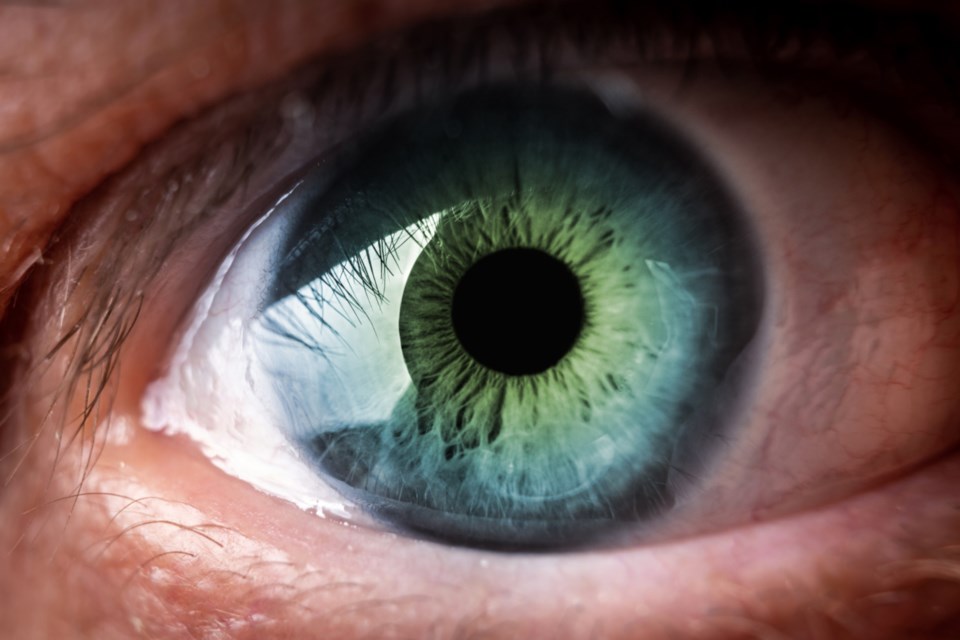
eye iris stock
If there is one thing we have gained during this time of self-isolation and social distancing because of the COVID-19 pandemic, it’s the opportunity to rethink our life choices – including those surrounding our health and well-being. 
Holistic health expert Christine Roy, owner and practitioner of Healing Holistics and Spa, has been working in the field for over 17 years.
The certified reflexologist, nutritionist, aesthetician, and iridologist, works remotely with clients at the current moment, but revealed some insights on how to stay healthy during the pandemic.
“The same rules apply now that do outside of this pandemic – namely diet and exercise,” says Roy. “And if there is a chance to get outside – the sun and fresh air can really help. We are so lucky to live in Northern Ontario where we have access to space.”
In contrast to southern Ontario’s crowded cities, where backyard space is lacking, Roy recommends even puttering in your backyard. “Of course, there are many places to walk – but during this health crisis, you want to avoid high traffic areas.”
Unlike many nutritionists, however, Roy specializes in analyzing people through the science of iridology (looking at the eyes).
“Iridology is a full body scan and is literally a window into your whole body health,” says Roy, who recommends her clients always begin with this type of exam. “A human eye is similar to a fingerprint and each person’s is unique. With this information, I can customize a health care plan for you – by determining what’s going on in every organ of your body.”
From inflammation to toxic areas to poor nutritional absorption, Roy is able to chart a nutritional plan (with supplements) to help prevent disease before it arises in the body.
“After taking extensive pictures, we look at them together,” says Roy. “This is not to replace a doctor’s evaluation. I often work in conjunction with doctors to provide a supportive, alternative health plan.”
Roy insists that iridology has existed for 130 years; however, some researchers question its results as unscientific.
“What I can tell you is I have only had satisfied clients,” said Roy. “There are a lot of people out there who aren’t content to just use Western medicine.”
She says that there has been a huge response to the reflexology service in Sault Ste. Marie.
“It’s really popular,” she said. “Whether it’s a therapeutic foot or hand massage, it’s not only a relaxation therapy – but it helps to increase circulation, reduces pain and inflammation throughout the body and boosts immunity.”
“Even though you might be just soaking your feet, your whole body will feel improvements – it can purge heavy metals from the body, reduce pain and swelling, and decrease sinus congestion as well.”


Here's How to Practice Moxibustion at Home, According to an Acupuncturist

Just because you are in a long-distance relationship with your acupuncturist doesn't mean you can't practice moxibustion at home by yourself. I've sung the praises of moxibustion before, but social distancing gave me a new appreciation for the holistic treatment, thanks to how accessible it is at home.

The ancient Chinese practice utilises burning moxa (a plant derived from the Asian mugwort root) to stimulate acupuncture points and move blood and Qi, explained Aileen Moy, an acupuncturist and herbalist with the Yinova Centre in New York City.
Typically, I finish off an acupuncture or cupping session with five minutes of moxibustion, which leaves me floating out of the office free of anxiety — my mind and body quiet and rested.
"While moxa can be used for many conditions (circulation, low energy, menstruation, arthritis, digestive issues, aches, and pains, for example), it may not be appropriate for everyone. Find out from a licenced practitioner if this is the right modality for your condition," Moy said.
It's important to note that moxa comes in many forms, and your specialist should advise the type and brand you use, too. Moy warned against ordering off of Amazon, "as the quality of the herb is not always consistent." The Yinova Centre offers Longevity Moxa Sticks ($5 for two).
In my case at home, Moy suggested burning moxa poles (which resemble incense) as opposed to our in-office stick-on moxa (think tiny candles attached to the skin) sessions. If your specialist approves this method for you, too, feel free to follow along with Moy's instructions below — then, reflect and take time to just chill. If you haven't talked to a licenced practitioner or your doctor, do not perform moxibustion at home.
  • Before beginning, have everything set up in an area that is clear of flammable objects — a space with great ventilation is recommended.
  • Light the tip of the moxa stick with the candle or lighter — it's important to stay focussed throughout the session for safety purposes.
  • Hold the tip of the moxa pole in the flame, turning it very slowly so the end is evenly lit and glowing red all the way through.
  • For those of you using smokeless moxa (the hard, black, charcoal/carbonized version of the moxa stick), it is best to use a burner or a small torch, as it will take several minutes to light the moxa pole with a single candle flame.
  • Hold the hot moxa tip over the points/channels that your acupuncturist has directed you to. Ideally, the pole should be perpendicular to the surface of the skin/point. Do not touch your skin with the moxa.
  • You'll gauge how close to hold the lit end of the pole based on how warm the moxa feels. Aim for a nice, strong heat from the moxa — it should be pleasant and not cause any burning or physical discomfort.
  • Remember to ash frequently to prevent residue from falling onto the skin while keeping the lit end nice and hot.
  • When it is time to extinguish the moxa, it is best not to use water. Simply drop it into an empty mason jar, and screw on the lid. Or press it straight up and down into a dish of uncooked rice or salt, making sure the entire lit end is completely covered.
  • Moxa takes a while to cool down even after it is no longer burning, so never touch the tip until you are sure it has fully cooled.
  • If possible, repeat every day for 20-30 minutes. If your schedule doesn't permit, aim for 10-20 minutes, three to four times a week.

Friday, April 3, 2020

10 things you can do right now at home to relieve stress, according to an acupuncturist

Life is super weird right now. Anxiety and stress are at an all-time high so now may be the time to think outside of the box when it comes to taking some of that pressure off. Though many people may put acupuncture—the ancient practice of inserting the end of a thin needle into your body to relieve pain and reduce stress—under the woo-woo medicine category, you may want to take a second look.
A 2015 study found that acupuncture helped people with anxiety that didn’t respond to other treatments. The study subjects received ten 30-minute sessions of acupuncture over 12 weeks and saw a major reduction in their anxiety, even after only 10 weeks of treatment. It can also be great for helping with pain points in your body. A 2012 study found it had a positive impact on chronic pain conditions like neck, back, shoulder pain and headaches.
Of course, due to the quarantine, most of us can’t get acupuncture right now (unless you are or live with a professional acupuncturist.) But the next best thing we can do is listen to an acupuncturist about how to bring down our stress levels. Gabriel Sher is the Director of Acupuncture at ORA. He gave Ladders a few tips on keeping calm during this crazy time.
  1. Stop reading on your phone about the Coronavirus because it will make the most relaxed person have anxiety.
  2. Use essential oils and candles (She suggests the ORA Summer in the woods candle and Aromatherapy Mist  by Será.The lavender, clary sage, and pine  smell evokes a fresh, uplifting, and energetic clarity.)
  3. Try apps that help with meditation and calm . Simple habit is my favorite
  4. Reorganize your closets. Get rid of stuff you don’t need. Organize
  5. Call your friends you haven’t had time to connect with in the past.
  6. Make your home warm and comfortable. Buy soft Comfortable sheets towels and bedding. Move things around. Buy nice lighting and candles.
  7. Eat well. Make nice healthy meals. Get back to nourishing your body in a healthy way.
  8. Take a bath and make it super luxurious
  9. Take walks and breathe
  10. Find a calm place outside. Create your own space and breathe

Wednesday, April 1, 2020

Acupuncture Found Effective Against Pneumonia-Induced Sepsis

Acupuncture increases the efficacy of drug therapy for the treatment of sepsis due to pneumonia.
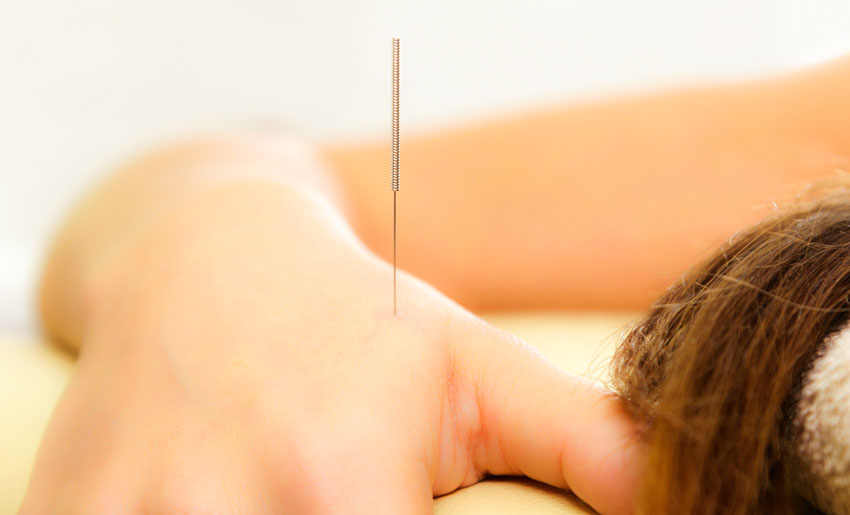
hand heguLI4
 Researchers from Guang'anmen Hospital of China Academy of Chinese Medical Science combined electroacupuncture with drug therapy. Patients receiving both drug therapy and electroacupuncture had superior patient outcomes compared with patients receiving drug monotherapy. The researchers conclude that the addition of acupuncture to a drug treatment regimen increases the total effective rate, assists in the regulation of immune system functions, increases anti-febrile actions, and alleviates inflammatory reactions.
The implications of this investigation are that an integrative medicine approach to infectious disease has the potential to save lives. The World Health Organization (WHO) notes that sepsis “affects more than 30 million people worldwide every year, potentially leading to 6 million deaths.” [2]
Guang'anmen Hospital researchers (Wang et al.) used the following study design. A total of 120 patients with pneumonia-induced sepsis were treated and evaluated in this study. They were randomly divided into an acupuncture treatment group and a control group, with 60 patients in each group. For control group patients, routine care (pain and fever-reducing drugs, water-electrolyte management, nutritional support) and anti-infective drugs were administered. The treatment group received acupuncture in addition to the same drug treatment regimen administered to the drug control group.
The statistical breakdown for each randomized group was as follows. The treatment group was comprised of 34 males and 26 females. The average age in the control group was 56.1 years. The control group was comprised of 32 males and 28 females. The average age in the control group was 55.9 years. There were no significant statistical differences in gender, age, and other demographics relevant to patient outcome measures.

Acupuncture And Drug Therapy:
For both groups, patients received routine care and anti-infective drugs. The anti-infective therapy contains 400 mg of a moxifloxacin hydrochloride injection (an antibiotic) and 250 ml of a 5% glucose solution. The two medicines were delivered by intravenous fluid drips for a total of 90 minutes.
The acupoints used for the treatment group included the following:
  • LI4 (Hegu)
  • LI11 (Quchi)
Once manual acupuncture achieved a deqi sensation, electroacupuncture (model HANS 200) was applied. A disperse-dense wave of 2/100 Hz was applied. Each electroacupuncture session lasted for 30 minutes.

Evaluations:
Multiple instruments were used to measure patient outcomes before and four hours after treatment. First, the onset time of fever abatement and total fever abatement time were recorded. The onset time of fever abatement action refers to the time when the body temperature decreased by 0.5℃. The total fever abatement times refer to the time when the body temperature returned to 37℃.
Second, serum inflammatory factors were measured, including tumor necrosis factor (TNF)-α, interleukin (IL)-1β, IL-8, and IL-10. TNF-α, IL-1β, and IL-8 are pro-inflammatory factors and IL-10 is an anti-inflammatory factor. Third, serum acetylcholine (ACh) and choline acetyl transferase (ChAT) levels were documented. ACh is synthesized by choline and acetyl-CoA under the catalysis of ChAT. It is the main neurotransmitter released by the vagus nerve and acts on macrophages to inhibit the release of inflammatory factors. Fourth, CD4+ cell percentage, CD8+ cell percentage, and the CD4+/CD8+ cell ratios were compared. CD4+ cells are T helper cells. CD8+ cells are T suppressor cells. The ratio of CD4+/CD8+ cells is used to quantify immune system status. A lower CD4+/CD8+ cell ratio indicates an increased risk of infection.
The onset time of fever abatement action and the fever clearance time in the acupuncture treatment group was significantly shorter than in the control group (p<0.05). Four hours after treatment, serum levels of TNF-α, IL-1β, and IL-8 in the treatment group were significantly lower than in the control group. Serum IL-10 levels in the treatment group were significantly higher than the control group (p<0.05). Serum levels of ACh and ChAT in the treatment group were significantly higher than those in the control group (p<0.05). CD4+ cell percentages and CD4+/CD8+ cell ratios in the treatment group were significantly higher than those in the control group. CD8+ cell percentages in the treatment group were significantly lower than in the control group (p<0.05).

Results:
The results indicate that acupuncture combined with conventional anti-infective therapy into an integrated treatment protocol is more effective than using routine care and anti-infective drugs without acupuncture. Wang et al. conclude that acupuncture is safe and effective for the treatment of pneumonia-induced sepsis.

References:
1. Wang S, Li LN, Qi WS. Curative Effect of Electroacupuncture of Large Intestine Meridian YUAN Point Combined with HE-sea Point in Treating Sepsis Patients Caused by Pneumonia and the Impact on Cholinergic Anti-inflammatory Pathway [J]. Practical Journal of Cardio-cerebral Pulmonary Vascular Disease, 2018, 26(8): 66-69.
2. who.int/sepsis/en/. Sepsis, World Health Organization. 3-31-2020.